
KYC with Swiss e-ID for a Swiss Private Bank
Manuela Fahrenberg, 2026
Art der Arbeit Bachelor Thesis
Auftraggebende Trafina Privatbank AG
Betreuende Dozierende Franka Ebai
Views: 1
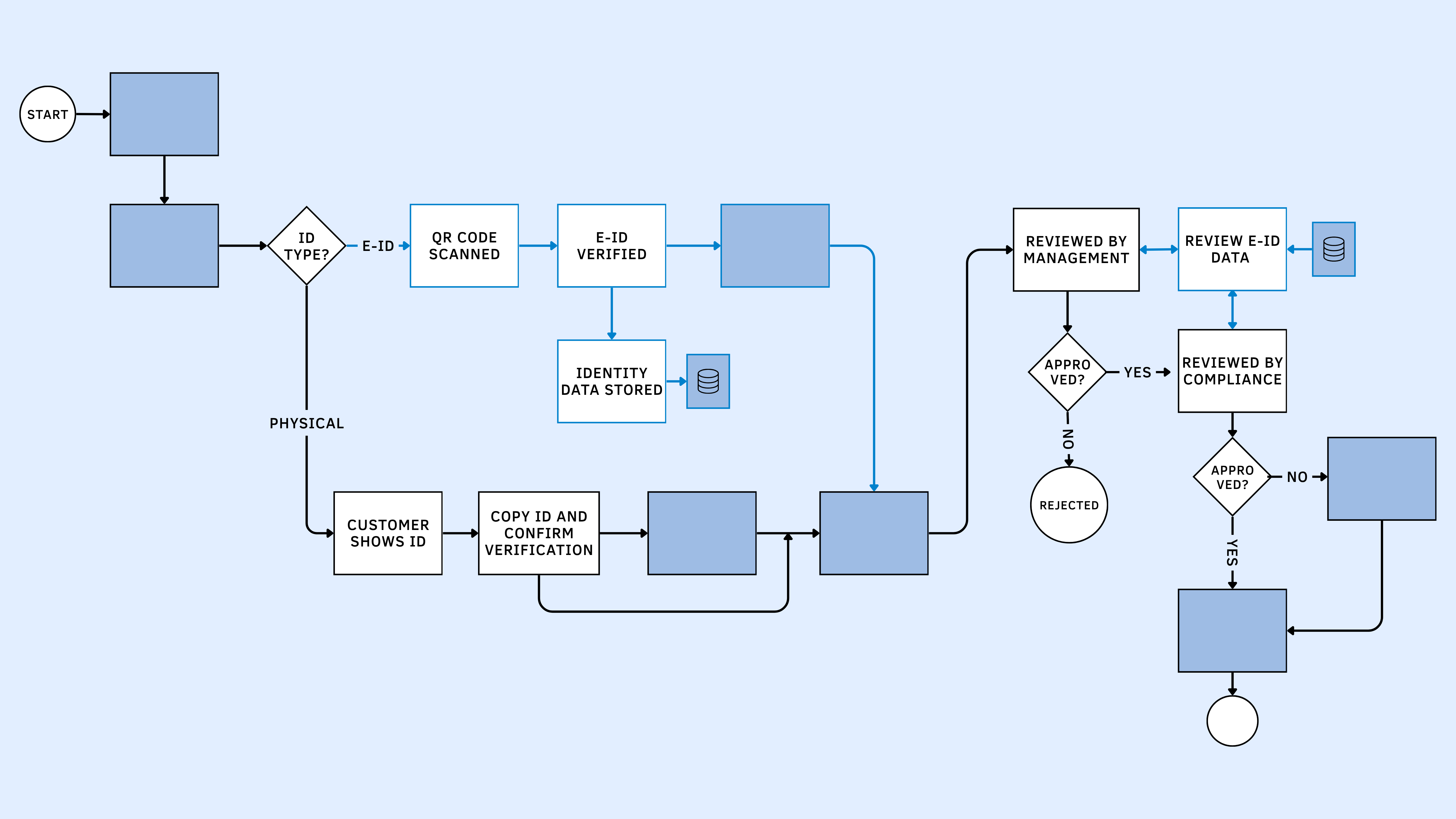
The investigated bank currently uses a largely paper-based onboarding process. Client data are entered repeatedly into documents, which are printed, signed, reviewed, scanned, and later transferred into the banking system. This creates administrative effort and increases risk of errors and rework. In this process, the e-ID can support the identity verification but cannot replace the wider KYC process. The purpose of this thesis is therefore to identify a compliant, efficient, client-friendly, and practical way to integrate it into the existing process.
The theoretical basis on KYC, e-KYC, digital identity, and process improvement was established through a literature review. The regulatory analysis identified the legal and data-protection requirements for e-ID use in banking. The current process was mapped to identify inefficiencies and activities that must remain. Twelve semi-structured interviews with six employees and six clients examined operational feasibility, expected benefits and risks, client acceptance, and preferred integration options of the e-ID. These findings were combined to develop a target process and implementation roadmap.
The results show that a hybrid approach best meets the objectives of compliance, efficiency, usability, and feasibility. The e-ID can improve identity verification and enable direct transfer of verified client data, reduce repeated entry, transcription errors, and document handling. However, contractual and beneficial owner identification, risk assessment, compliance review, approvals, and documentation remain.In the short term, the bank should avoid major investment and monitor regulatory developments, available verifier solutions, industry adoption, and its own technical and process requirements. In the medium term, it should consider integrating an e-ID verifier into the existing onboarding environment so verified data and the verification result can flow directly into existing systems. The e-ID remains as an option for clients.Overall, the proposed roadmap addresses the identified process weaknesses while preserving required KYC controls and personal client contact. Gradual integration is therefore more suitable for a small private bank than a fully digital redesign of onboarding.
Studiengang: Business Administration International Management (Bachelor)
Keywords e-ID, Swiss electronic identity, banking, private banking
Vertraulichkeit: vertraulich
Art der Arbeit
Bachelor Thesis
Auftraggebende
Trafina Privatbank AG, Basel
Autorinnen und Autoren
Manuela Fahrenberg
Betreuende Dozierende
Franka Ebai
Publikationsjahr
2026
Sprache der Arbeit
Englisch
Vertraulichkeit
vertraulich
Studiengang
Business Administration International Management (Bachelor)
Standort Studiengang
Olten
Keywords
e-ID, Swiss electronic identity, banking, private banking