
Identification and Evaluation of Generative AI Use Cases in the Product Management of Legal Protection Insurance
Yeshe Krähenbühl & Ötkür M aimaiti, 2026
Art der Arbeit Bachelor Thesis
Auftraggebende Swiss insurance company
Betreuende Dozierende Beat Habegger
Views: 15
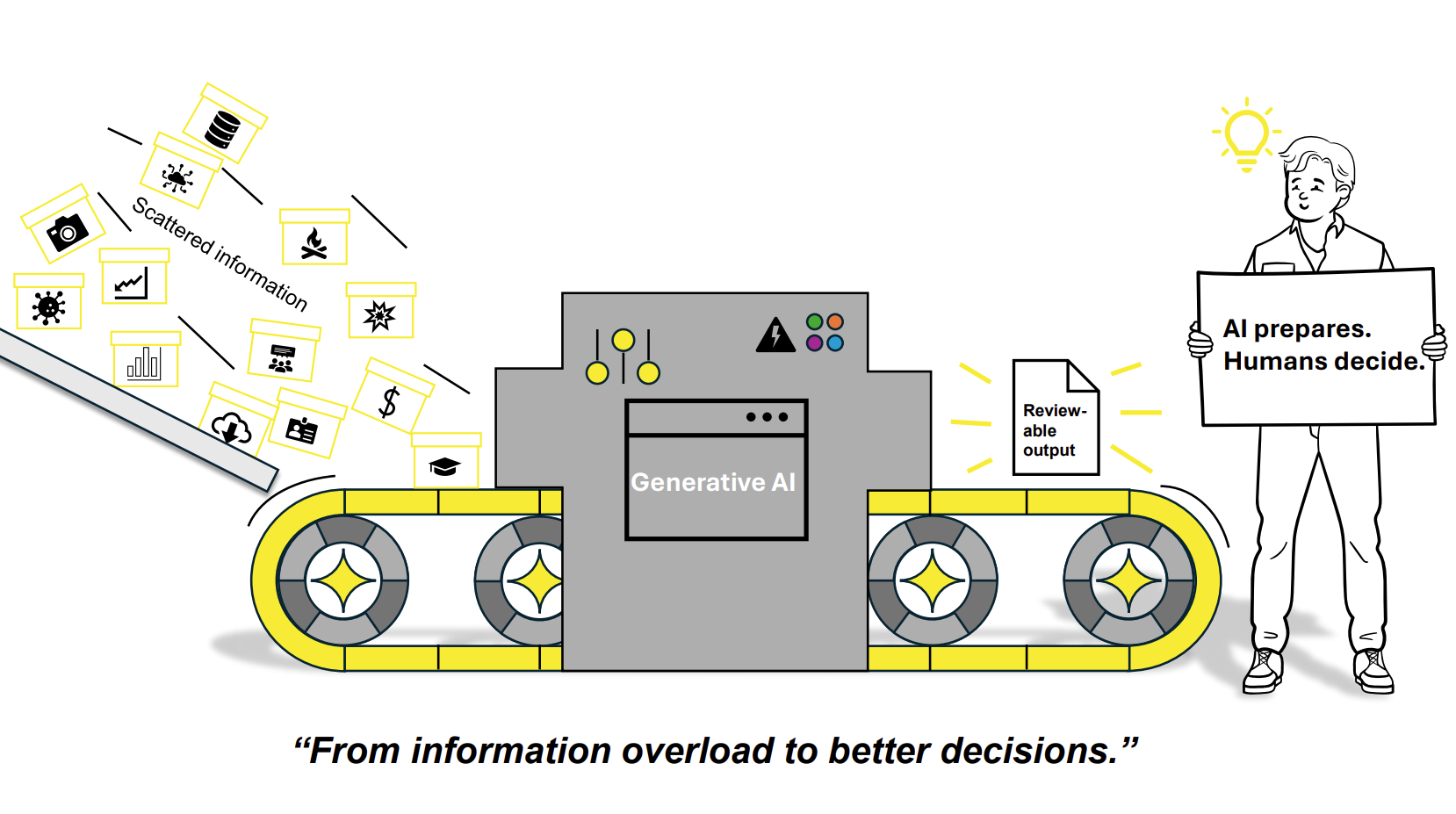
Sixty-five percent of European insurers already use generative AI, yet most applications remain at proof-of-concept stage. Structured knowledge about which tasks genuinely benefit is scarce. Product management is a particularly relevant case: gathering, interpreting and documenting information from many sources closely resembles what the technology does well. But legal protection products are complex, regulated and error-sensitive. The client therefore wanted to know where generative AI could realistically improve its product management processes and where it could not.
The study follows a qualitative design. A literature review on product management, task characteristics in knowledge work, process performance and generative AI was synthesised into a task-based evaluation framework linking task characteristics, task demands, AI capabilities and expected performance impacts. It was applied to two contrasting processes at the client: an internal, coordination-intensive documentation process, and a formalised, externally published one. The analysis draws on internal process documentation and five expert interviews.
Three findings emerged. First, suitability is determined by the dominant task demand rather than by complexity alone: within one process, consolidating scattered input into structured requirements proved highly suitable, while the less complex task of evaluating those requirements did not, because judgement and stakeholder alignment dominate there. Second, information transformation alone is not enough. A use case creates value only when reviewing and correcting the output costs less than doing the work manually. This verifiability criterion emerged from the interviews and was added to the framework. Third, generative AI creates value before the decision point, in preparing information, but less so in final product judgement, where accountability must remain human.The thesis recommends building a focused product knowledge base, piloting an AI-supported requirement consolidation workflow under full human review, and adopting the task-based approach for identifying further use cases. As the assessment is qualitative and not yet validated in live implementation, the results are an evidence-based starting point for controlled pilots rather than proof of realised gains.
Studiengang: Business Administration International Management (Bachelor)
Keywords Generative AI, Insurance, Legal protection, Product management, Large language models, Task-based framework, Knowledge Work, Process performance, Human in the loop
Vertraulichkeit: vertraulich
Art der Arbeit
Bachelor Thesis
Auftraggebende
Swiss insurance company
Autorinnen und Autoren
Yeshe Krähenbühl & Ötkür M aimaiti
Betreuende Dozierende
Beat Habegger
Publikationsjahr
2026
Sprache der Arbeit
Englisch
Vertraulichkeit
vertraulich
Studiengang
Business Administration International Management (Bachelor)
Standort Studiengang
Olten
Keywords
Generative AI, Insurance, Legal protection, Product management, Large language models, Task-based framework, Knowledge Work, Process performance, Human in the loop