
Cross-Selling at BRUGG eConnect AG
Anja Keller & Edessa Oliver & Thissana Thillainathan & Fatima Darri & Meriyana Colombara, 2025
Art der Arbeit Projektarbeit/Praxisprojekt
Auftraggebende BRUGG eConnect AG
Betreuende Dozierende Olga Schibli
Views: 67
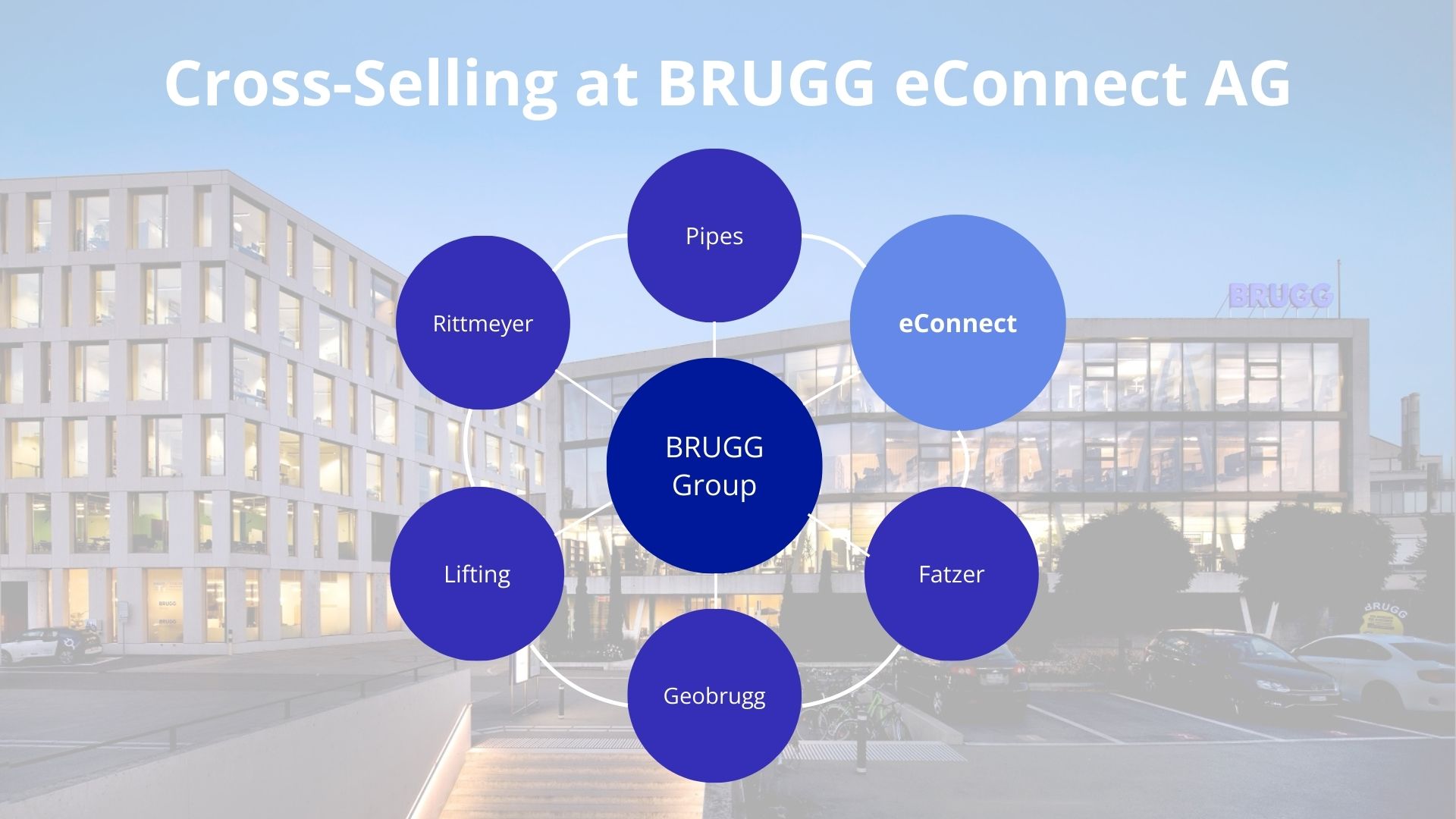
BRUGG eConnect aims to establish systematic cross-selling across six largely independent divisions. Although major customers (e.g. SBB, Axpo, BKW) are served by multiple units, sales run through separate channels with limited internal visibility. BRUGG eConnect, which is currently in a turnaround phase, misses collaboration opportunities. Known key barriers as fragmented IT/CRM, unclear commercial rules for attribution, value-sharing, and silo mentality, might be seen to a certain extend.
We conducted 13 semi-structured interviews: 7 with internal stakeholders (Group, Pipes, Rittmeyer, eConnect, Lifting, Geobrugg) and 6 with representatives from other companies (Nexans, Swiss Life, Johnson & Johnson, Post CH, Rothenberger, Diaqua). Using McKinsey's Six C Model and Business Model Canvas, we systematically analyzed organizational readiness, customer overlap, and structural barriers. Best practices from other companies highlighted enabling levers such as Strategic Account roles, integrated CRM, structured opportunity identification, and transparent value-sharing agreements.
The project shows that classic product-driven cross-selling is not the primary lever for improving interdivisional collaboration. Instead, cross-selling opportunities mainly arise through network-based mechanisms, such as leveraging trust-based access, existing customer relationships, and shared market knowledge across divisions. The potential for collaboration differs significantly between all units: while Pipes and Rittmeyer operate in overlapping customer segments, other units address largely distinct markets. This heterogeneity indicates that the BRUGG Group is still at an early stage of its cross-selling journey and requires a differentiated approach.
Based on the project goal, informed by literature, best practices, and interviews, we developed a three-level cross-selling framework: 1. internal visibility and awareness, 2. opportunity-based referrals, and 3. selective joint engagements. These levels represent increasing degrees of collaboration rather than alternative options. The framework follows a stepwise logic with clearly defined roles to limit complexity and prevent sales overload, while providing practical guidance for sustainable interdivisional value creation.
Studiengang: Business Administration International Management (Bachelor)
Keywords Cross-selling, Trends, Global, Switzerland, Inter-divisional cooperation
Vertraulichkeit: vertraulich
Art der Arbeit
Projektarbeit/Praxisprojekt
Auftraggebende
BRUGG eConnect AG, Brugg
Autorinnen und Autoren
Anja Keller & Edessa Oliver & Thissana Thillainathan & Fatima Darri & Meriyana Colombara
Betreuende Dozierende
Olga Schibli
Publikationsjahr
2025
Sprache der Arbeit
Englisch
Vertraulichkeit
vertraulich
Studiengang
Business Administration International Management (Bachelor)
Standort Studiengang
Brugg-Windisch
Keywords
Cross-selling, Trends, Global, Switzerland, Inter-divisional cooperation