
Attitudes Toward AI and Humanoid Robot Scenarios
Anja Krebs, 2025
Art der Arbeit Bachelor Thesis
Auftraggebende FHNW Institut für Wirtschaftsinformatik
Betreuende Dozierende Stephan Vonschallen
Views: 77 - Downloads: 26
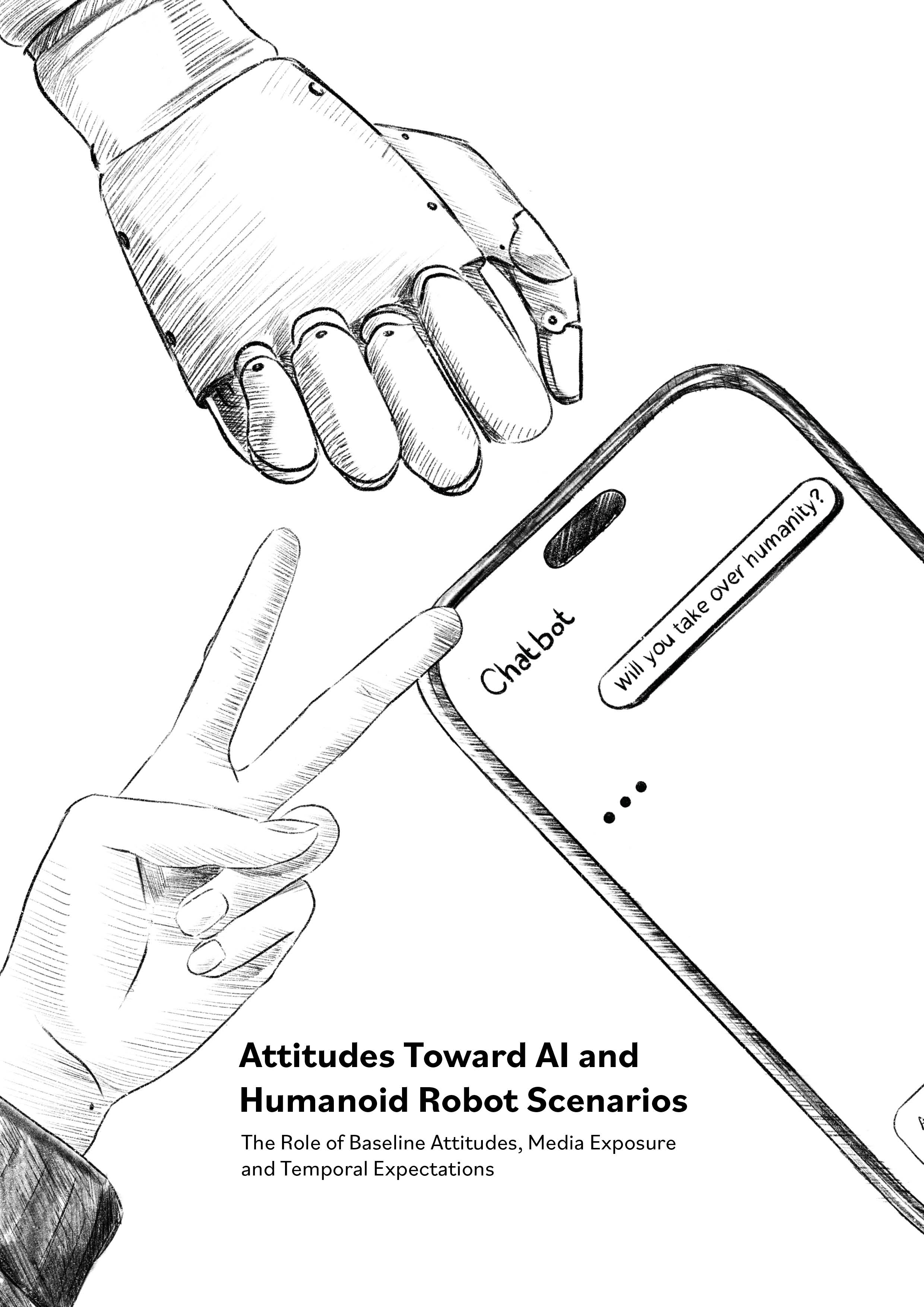
Public debates about artificial intelligence are often shaped by both expectations of efficiency and innovation and fears of danger, loss of control, and societal harm. While many studies examine general attitudes toward AI, less is known about how people evaluate concrete AI scenarios and which factors influence these evaluations. In particular, it remains unclear how baseline attitudes, media exposure and temporal expectations impact the evaluations of scenarios.
An online survey study was conducted in which participants evaluated a set of future-oriented scenarios involving artificial intelligence and humanoid robots. The scenarios described present, near-future and more distant AI applications and were rated on perceived usefulness, willingness to use, perceived errors, emotional discomfort, uncanniness and perceived threat. The survey additionally assessed general attitudes toward AI, exposure to science-fiction media and AI-related news, self-reported AI knowledge and expectations regarding when the scenarios might occur.
The results indicate that participants clearly differentiated between scenarios based on their expected time of occurrence. Scenarios perceived as occurring in the present or near future were evaluated more positively, whereas scenarios expected to occur further in the future were evaluated more critically. General attitudes toward AI emerged as the strongest factor shaping scenario evaluations. Participants with more positive baseline attitudes consistently evaluated scenarios more favorably, regardless of specific scenario content. Science-fiction exposure showed only limited associations with scenario evaluations, while exposure to AI-related news and self-reported AI knowledge were not meaningfully related to how scenarios were evaluated. Overall, the findings indicate that evaluations of future AI developments are primarily shaped by general attitudes toward AI and temporal expectations, with more distant and highly autonomous scenarios evoking greater caution and concern.
Studiengang: Business Information Technology (Bachelor)
Keywords Artificial Intelligence, Humanoid Robots, Attitudes, Impact Factors, Media Exposure, Scenarios
Vertraulichkeit: öffentlich
Art der Arbeit
Bachelor Thesis
Auftraggebende
FHNW Institut für Wirtschaftsinformatik, Basel
Autorinnen und Autoren
Anja Krebs
Betreuende Dozierende
Stephan Vonschallen
Publikationsjahr
2025
Sprache der Arbeit
Englisch
Vertraulichkeit
öffentlich
Studiengang
Business Information Technology (Bachelor)
Standort Studiengang
Basel
Keywords
Artificial Intelligence, Humanoid Robots, Attitudes, Impact Factors, Media Exposure, Scenarios