
Entering India’s DC Fast-Charging Market
Jonas Künzi & Robin Michelsen, 2026
Type of Thesis Bachelor Thesis
Client Swiss charging-technology provider
Supervisor Pieter Jan Perrett
Views: 10
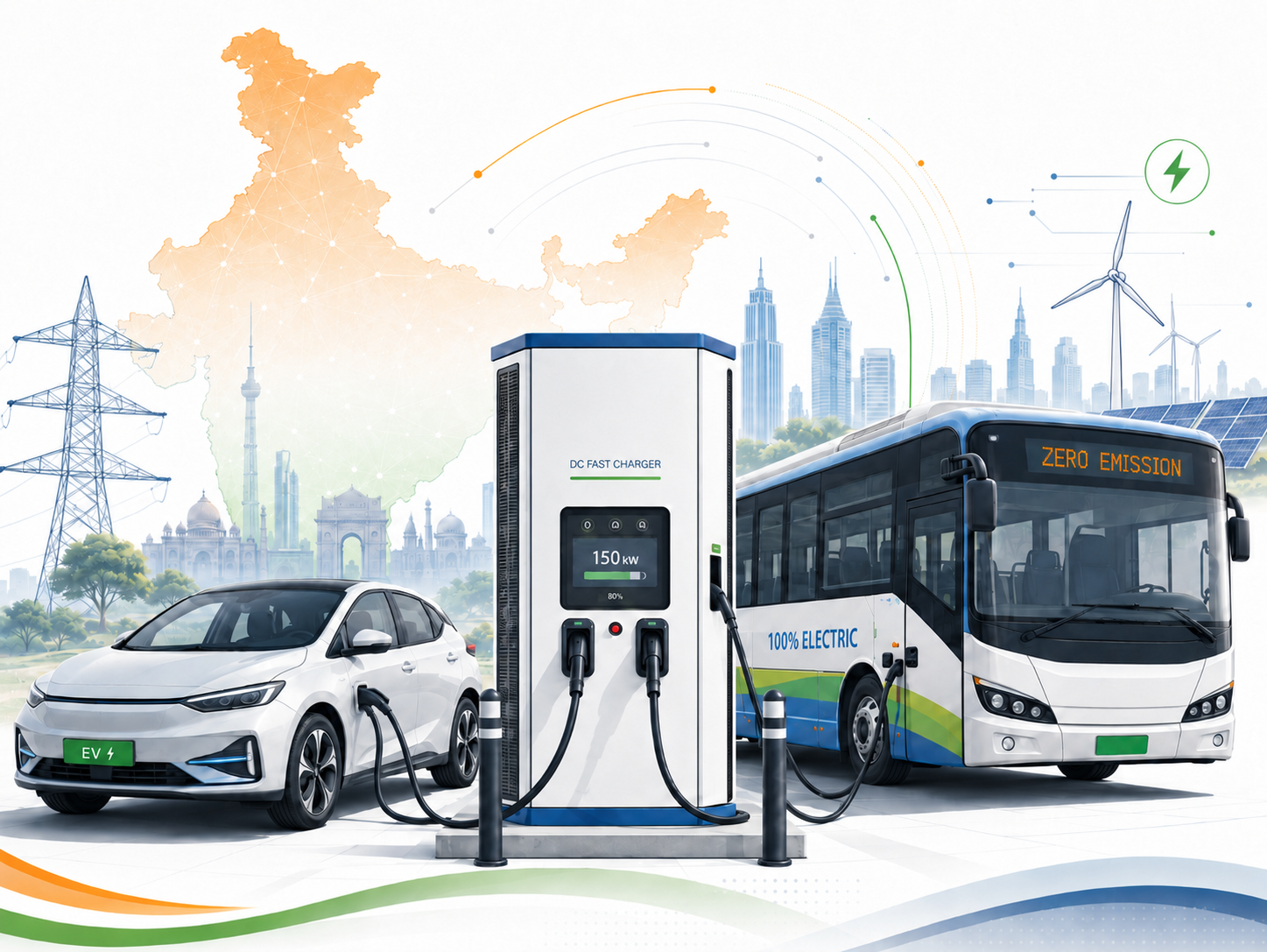
India is one of the world’s most dynamic electric mobility markets. Policy support, public funding and rising demand for cleaner transport are accelerating the need for charging infrastructure. At the same time, the DC fast-charging market remains fragmented and complex, with strong regional differences, evolving technical standards, price-sensitive customers and implementation challenges related to grid access, service capacity and local partnerships.
The thesis combined secondary research, strategic frameworks and expert interviews. The literature review examined India’s EV market, DC fast-charging infrastructure, customer segments, competitors and market-entry theory. PESTEL, value-chain analysis, stakeholder mapping, Porter’s Five Forces and the OLI paradigm were applied to structure the analysis. Five expert interviews with Indian market and EV-sector specialists were used to validate and complement the findings.
The analysis indicates that India is attractive for a Swiss DC fast-charging technology provider, but only under selective conditions. A broad, low-cost and purely export-oriented entry appears unsuitable because the market is price-sensitive, regionally diverse and strongly dependent on local implementation capability. The most promising pathway is a staged, partnership-based approach focused on high-utilisation B2B applications. Relevant customer segments include electric bus operators, logistics and freight fleets, public-sector infrastructure projects, highway corridors and selected charging-network or fleet applications. In these areas, reliability, uptime, safety, service quality and lifecycle performance can create measurable operational value. Successful market entry would require a capable local partner with customer access, regulatory knowledge, installation capacity, grid-connection experience, localisation capability and after-sales service. The findings therefore suggest entering India selectively, validating the business case through focused projects and expanding only once the technical, commercial and partner model has proven viable under Indian conditions.
Studyprogram: Business Administration International Management (Bachelor)
Keywords Electric Mobility, Electric Vehicle, DC fast charging, India, Market Entry
Confidentiality: vertraulich
Type of Thesis
Bachelor Thesis
Client
Swiss charging-technology provider
Authors
Jonas Künzi & Robin Michelsen
Supervisor
Pieter Jan Perrett
Publication Year
2026
Thesis Language
English
Confidentiality
Confidential
Studyprogram
Business Administration International Management (Bachelor)
Location
Olten
Keywords
Electric Mobility, Electric Vehicle, DC fast charging, India, Market Entry