
Designing a Course Curriculum for Digital Sovereignty
Khalid Douch, 2026
Type of Thesis Bachelor Thesis
Client Fachhochschule Nordwestschweiz
Supervisor Barbara Eisenbart
Views: 19
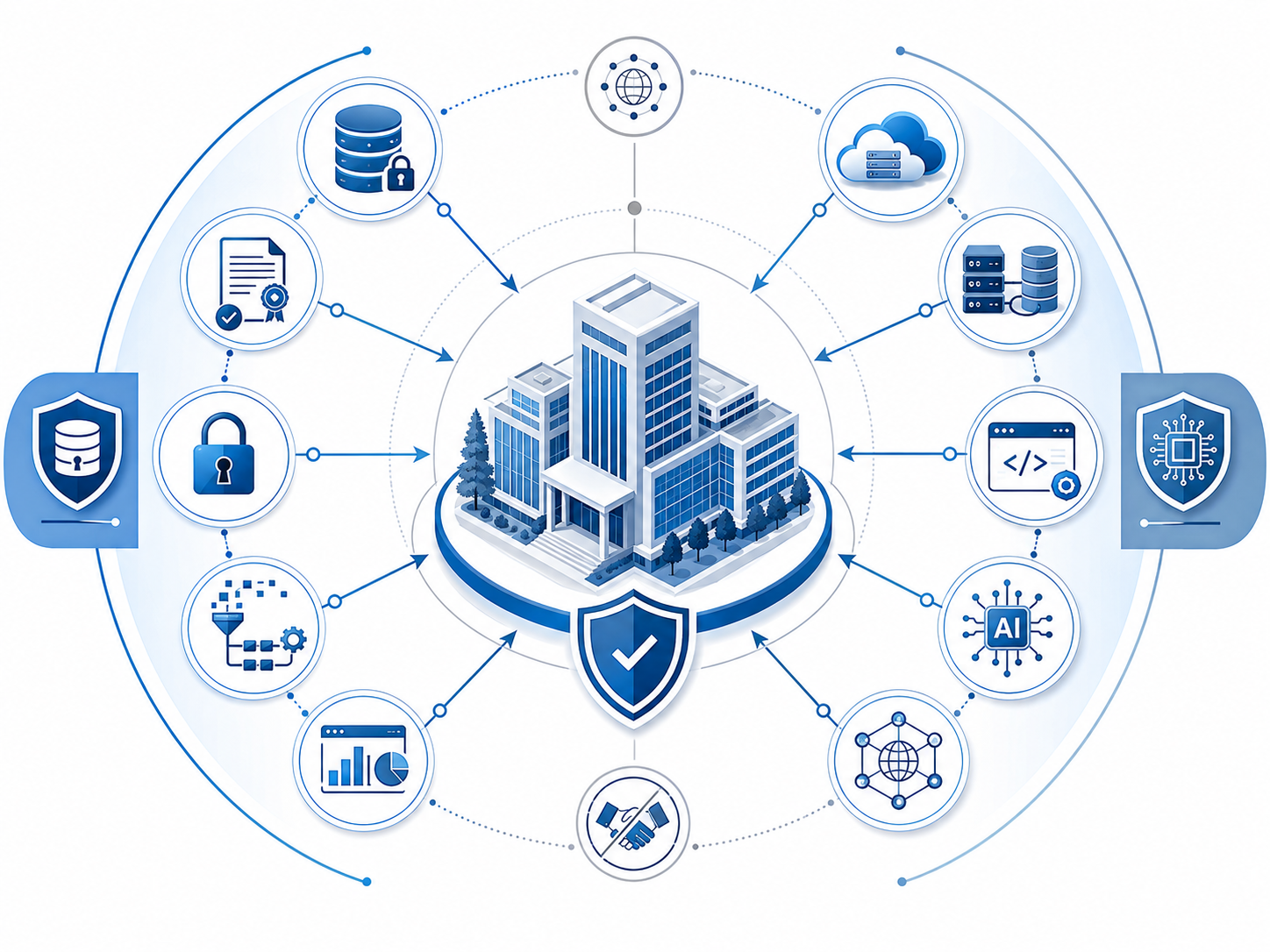
Organizations increasingly depend on external digital infrastructures, cloud services and data-driven technologies. These dependencies raise important questions about how organizations can maintain control over their data, technologies and digital decision-making. Since digital sovereignty is still a complex and often abstract concept, this thesis addresses the need for a curriculum that makes the topic understandable and applicable for students in organizational contexts.
The research follows a qualitative and design-oriented approach. A literature review of 36 sources was used to establish the theoretical foundation and identify key dimensions of digital sovereignty. Nine expert interviews with roles related to information security in Switzerland provided practical insights into organizational challenges and learning requirements. In addition, 18 existing online courses on digital sovereignty and related topics were identified. Using predefined evaluation criteria, the five best courses were selected to derive design implications for the own course curriculum.
The main outcome of this thesis is a course curriculum framework for digital sovereignty. The literature analysis suggests that digital sovereignty is a multidimensional concept that can be structured around data sovereignty, technological sovereignty and cross-cutting themes such as artificial intelligence. The interviews highlighted practical challenges, including dependence on cloud service providers and limited awareness of digital sovereignty. The course analysis provided design implications for the own course curriculum in terms of structure, evaluation and learning approach. These findings were translated into a curriculum consisting of five modules. The curriculum begins with an introduction phase covering technical, data protection, legal, and GRC basics before introducing the concept of digital sovereignty. The following modules deepen data sovereignty, technological sovereignty and cross-cutting themes. The final module is based on a case study in which students analyse digital dependencies and risks of an organization and recommend measures to mitigate them. The curriculum provides a foundation for teaching digital sovereignty in a practical and comprehensible way.
Studyprogram: Wirtschaftsinformatik (Bachelor)
Keywords Digital Sovereignty, Data Sovereignty, Technological Sovereignty
Confidentiality: öffentlich
Type of Thesis
Bachelor Thesis
Client
Fachhochschule Nordwestschweiz, Basel
Authors
Khalid Douch
Supervisor
Barbara Eisenbart
Publication Year
2026
Thesis Language
English
Confidentiality
Public
Studyprogram
Wirtschaftsinformatik (Bachelor)
Location
Olten
Keywords
Digital Sovereignty, Data Sovereignty, Technological Sovereignty