
Using Artificial Intelligence for Generating Serious Game Scenarios
Julie Klingelschmitt, 2025
Type of Thesis Master Thesis
Client
Supervisor Hermann Grieder & Bettina Schneider
Views: 12 - Downloads: 17
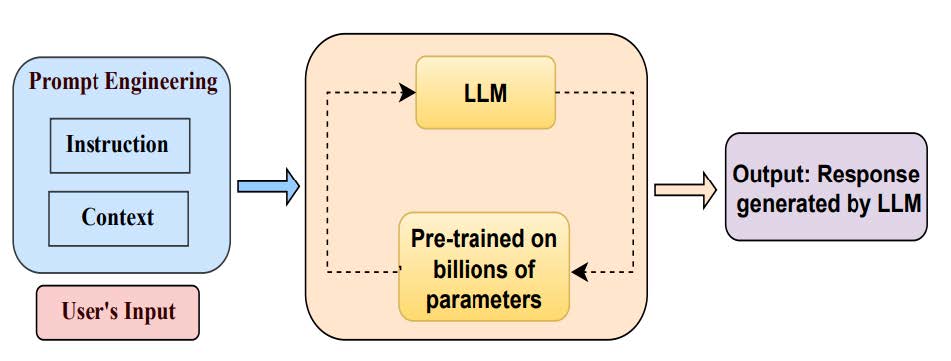
Building on the pedagogical potential of SGs, the integration of Artificial Intelligence (AI) into SG design and moderation has opened promising opportunities to improve learning outcomes. However, the use of this emerging technology for scenario generation as part of SG moderation remains underexplored. In this thesis, SG moderation refers to the facilitation of game flow through the creation of scenarios that define the game rules based on the available game materials. Indeed, a research gap in procedural guidance for educators seeking to implement AI for this moderation purpose exist. The use of AI and more specifically Large Language Models (LLMs) implies challenges such as hallucinations and bias. Furthermore, AI challenges may not be only confined to the educational domain and can be interdisciplinary which underscores the significance of this research on a wider scope. Hence, this reinforces the need for a structured framework.
This study addresses this gap by focusing on how LLMs can be used to generate scenarios that support the moderation of SGs, thereby providing procedural guidance for their use. To develop a clear comprehension of the subject matter, a literature review exploring AI within SG design and moderation was conducted to identify opportunities and challenges related to the most recent applications. This review aided to identify the problem statement and the research gap. The primary objective of this study is to enable educators to use AI to generate game scenarios for educational purposes. To this end, a process model artefact was developed, following the Design Science Research (DSR) strategy. The process model is intended to provide practical guidance for the implementation of AI within SGs. To evaluate and iteratively refine the artefact, experiments and expert interviews were conducted.
Findings indicate that LLMs can systematically generate playable scenarios to a certain extent, when guided by a process model. However, expert feedback highlights limitations related to creativity control and the need for empirical classroom validation. These results offer practical guidance for educators and provide a foundation for future research. The knowledge gained from this study can contribute toward a better understanding of the use of AI within SGs, from both theoretical and practical perspectives.
Studyprogram: Business Information Systems (Master)
Keywords
Confidentiality: öffentlich
Type of Thesis
Master Thesis
Authors
Julie Klingelschmitt
Supervisor
Hermann Grieder & Bettina Schneider
Publication Year
2025
Thesis Language
English
Confidentiality
Public
Studyprogram
Business Information Systems (Master)
Location
Olten