
Investigation of the Application of Agentic AI in Global Freight Forwarding
Celine Graf, 2025
Type of Thesis Master Thesis
Client
Supervisor Lionel Pilorget
Views: 20
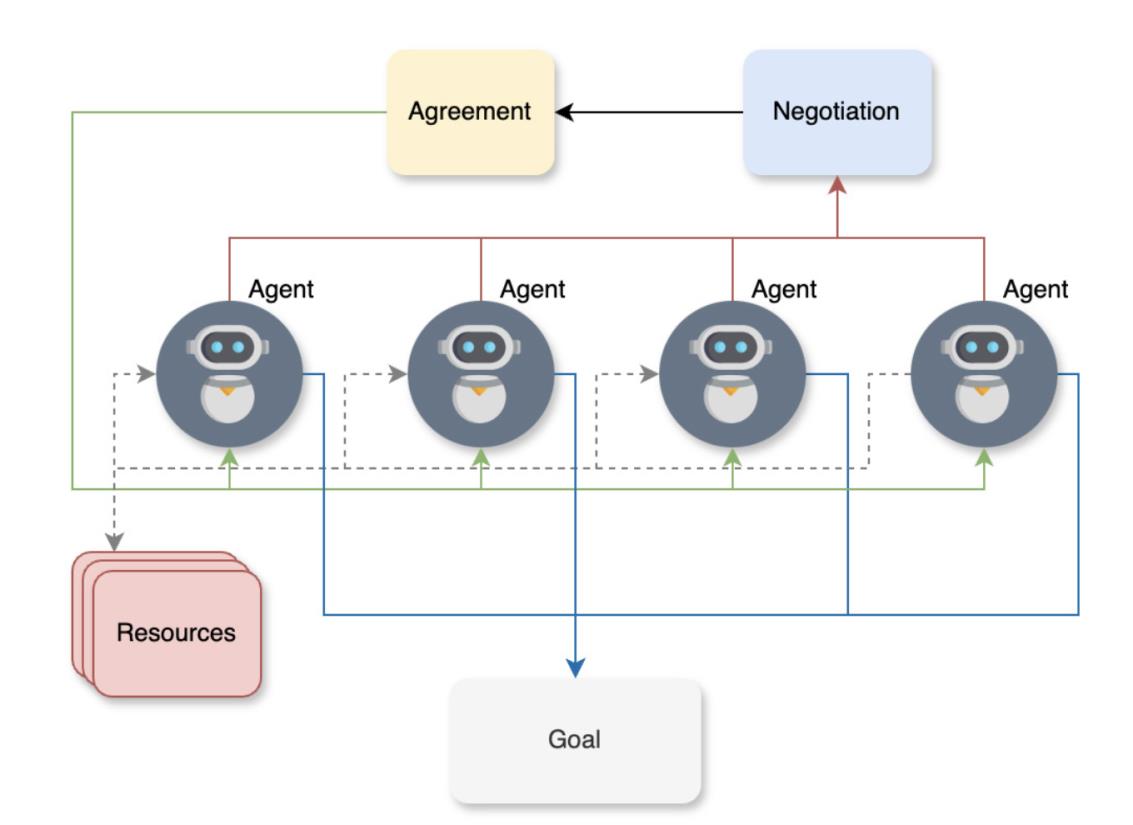
The empirical focus is placed on airfreight export operations, a document-intensive and regulation-driven domain where traditional rule-based automation frequently fails due to fragmented information and customer-specific variability. To systematically assess the contexts in which Agentic AI can deliver practical value, the study develops a Decision Framework Matrix for evaluating freight forwarding subprocesses based on their operational improvement potential and AI deployment complexity.
The study follows a mixed-method research design combining expert interviews and a survey to assess subprocess characteristics and technical feasibility.
Results indicate higher near-term feasibility for Agentic AI in subprocesses initiated outside Transportation Management Systems (TMS), enabled by lightweight, web-based implementations. Subprocesses embedded within core TMS workflows show long-term potential but remain constrained by API availability and organizational readiness. Taken together, the analysis demonstrates Agentic AI adoption depends primarily on process anchoring, data accessibility and integration maturity rather than model capability. The thesis contributes a structured framework for prioritizing Agentic AI adoption in freight forwarding and outlines a phased implementation pathway.
Studyprogram: Business Information Systems (Master)
Keywords
Confidentiality: vertraulich
Type of Thesis
Master Thesis
Authors
Celine Graf
Supervisor
Lionel Pilorget
Publication Year
2025
Thesis Language
English
Confidentiality
Confidential
Studyprogram
Business Information Systems (Master)
Location
Olten