
Personalized learning through Large Language Models - A study on adaptive educational support
Ebrar Dauti, 2025
Type of Thesis Master Thesis
Client
Supervisor Stephan Jüngling
Views: 15 - Downloads: 11
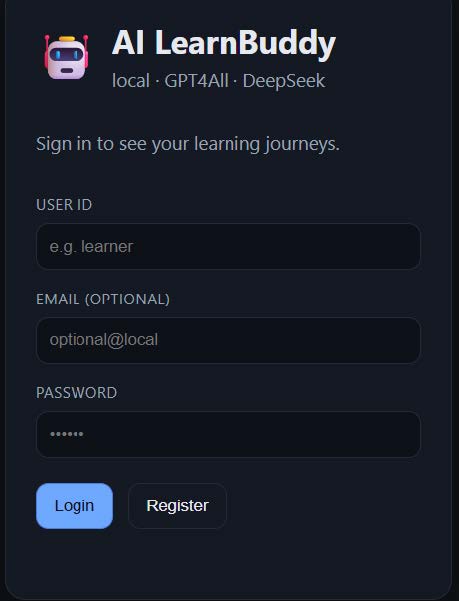
This thesis examines how Large Language Models (LLMs) can be used to create personalised learning journeys in education. It focuses on the design, implementation and evaluation of AILearnBuddy, an AI based tutoring system that aims to adapt learning paths to individual learners in a controlled and transparent way.
The research is guided by one main research question and five sub-questions that address the advantages and limitations of LLMs, ethical and trust related issues, technical and infrastructural requirements, mechanisms for adapting learning journeys and risk mitigation. The study follows a Design Science Re-search approach. First, a literature-based problem analysis clarifies the potential of LLMs for adaptive content generation and interactive feedback, but also reveals risks such as hallucinations, opacity of reasoning, privacy concerns and the danger of over reliance on AI. On this basis, the thesis derives requirements for a system that supports personalised learning without giving up pedagogical control or ethical responsibility.
The artefact is evaluated with simulated learner personas instead of real students. Several personas with different prior knowledge and learning behaviour interact with the system in three domains: mathematics, BPMN and language learning. Scenario based sessions are executed and stored as JSONL logs. These logs are analysed with predefined key performance indicators that focus on completion of the learning pipeline, consistency of progression decisions, coverage of Bloom levels, use of retrieval and stability of system behaviour. The evaluation shows that AILearnBuddy reliably executes the intended steps, adapts tasks and feedback to learner performance and keeps its decision making trace-able across domains. Retrieval augmented generation reduces obviously incorrect or off topic responses, although careful scoping and ongoing monitoring re-main necessary.The thesis concludes that LLMs can meaningfully support personalised learning journeys if they are embedded in a structured socio technical architecture. Such an architecture must separate pedagogical rules from model calls, ground responses in curated content, enforce explicit progression logic and provide de-tailed logging for transparency and improvement. Under these conditions, systems like AILearnBuddy can help institutions offer more adaptive support at scale, in domains with clear learning objectives and stable content.At the same time, the work has important limitations. The evaluation is based on simulated personas and controlled scenarios, not on long term use with real learners and teachers. The domains covered are limited and broader institutional, legal and socio-economic questions are only touched upon. Future work should therefore include pilot deployments with students and educators, integration with learning management systems, extension to additional subjects and assessment formats, and deeper investigation of fairness, motivation and learner autonomy in AI supported learning environments.
Studyprogram: Business Information Systems (Master)
Keywords
Confidentiality: öffentlich
Type of Thesis
Master Thesis
Authors
Ebrar Dauti
Supervisor
Stephan Jüngling
Publication Year
2025
Thesis Language
English
Confidentiality
Public
Studyprogram
Business Information Systems (Master)
Location
Olten